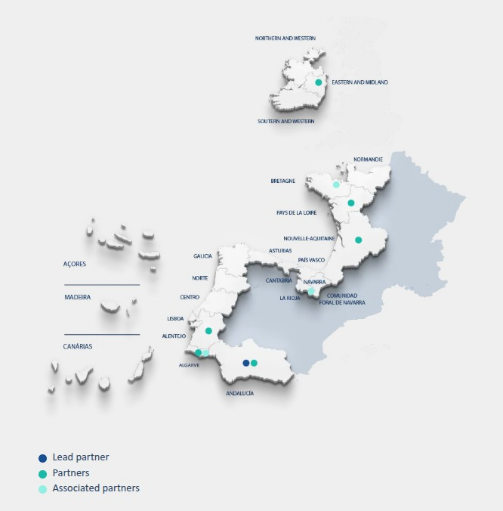
This week, Huelva will be the setting for the launch of the European project AGREE – Routes of the Great Nautical Expeditions in the Atlantic Area, a transnational cooperation initiative that works to highlight the historical, cultural, and heritage legacy of the great nautical expeditions from a European and sustainable tourism perspective. The meeting will be held from January 27 to 29 and will bring together representatives of the project's partner organizations from Spain, Portugal, France, and Ireland.
The event is structured over three days. The first and last days will be dedicated to technical coordination meetings between partners, visits to sites where the project's pilot activities will take place or related to nautical expeditions, and working sessions focused on strategic planning, governance, and communication. Within this framework, partners will learn firsthand about the planned activities in the province of Huelva, linked not only to Columbus's heritage but also to the historical role of Huelva sailors in the great oceanic expeditions.
The main day, Wednesday, January 28, will be open to the general public and will revolve around the Inaugural Conference, "Great Atlantic Expeditions from a Network Perspective," which will take place in the Lecture Hall of the Faculty of Education, Psychology, and Sports Sciences at the University of Huelva, on the El Carmen Campus. This conference will bring together academics and experts to reflect on the enhancement of the intangible cultural heritage shared by the territories of the European Atlantic coast and on the creation of an Atlantic cooperation network centered around these historical routes.
The conference program will address, among other topics, the presentation of the AGREE project, the launch of its Scientific Advisory Committee and the future Atlantic Association, as well as various presentations and working groups focused on communication, cultural interpretation, and the development of a new Atlantic Cultural Route based on the great nautical expeditions. The program will also include an analysis of the role played by sailors from Huelva in these historical processes and their projection from a contemporary and European perspective.
AGREE's main objective is the creation of the Atlantic Network for the Enhancement of Great Nautical Expeditions, applying the framework of the Council of Europe's Cultural Routes and promoting a sustainable, innovative, and high-quality blue tourism model. The project includes pilot projects in Huelva, Lagos and Sines (Portugal), and the French region of Ouest Charente – Pays du Cognac, which will serve as demonstration sites for the future European cultural route.
The AGREE project is led by the Provincial Council of Huelva, through its Local Development and European Funds Service, and has a total budget of €2.38 million. This initiative is 75% co-financed by the European Union through the European Regional Development Fund (ERDF), within the framework of the Interreg Atlantic Area European territorial cooperation program, which supports transnational cooperation initiatives aimed at sustainable development and the enhancement of the shared heritage of European Atlantic territories.